
27
Oct
2026
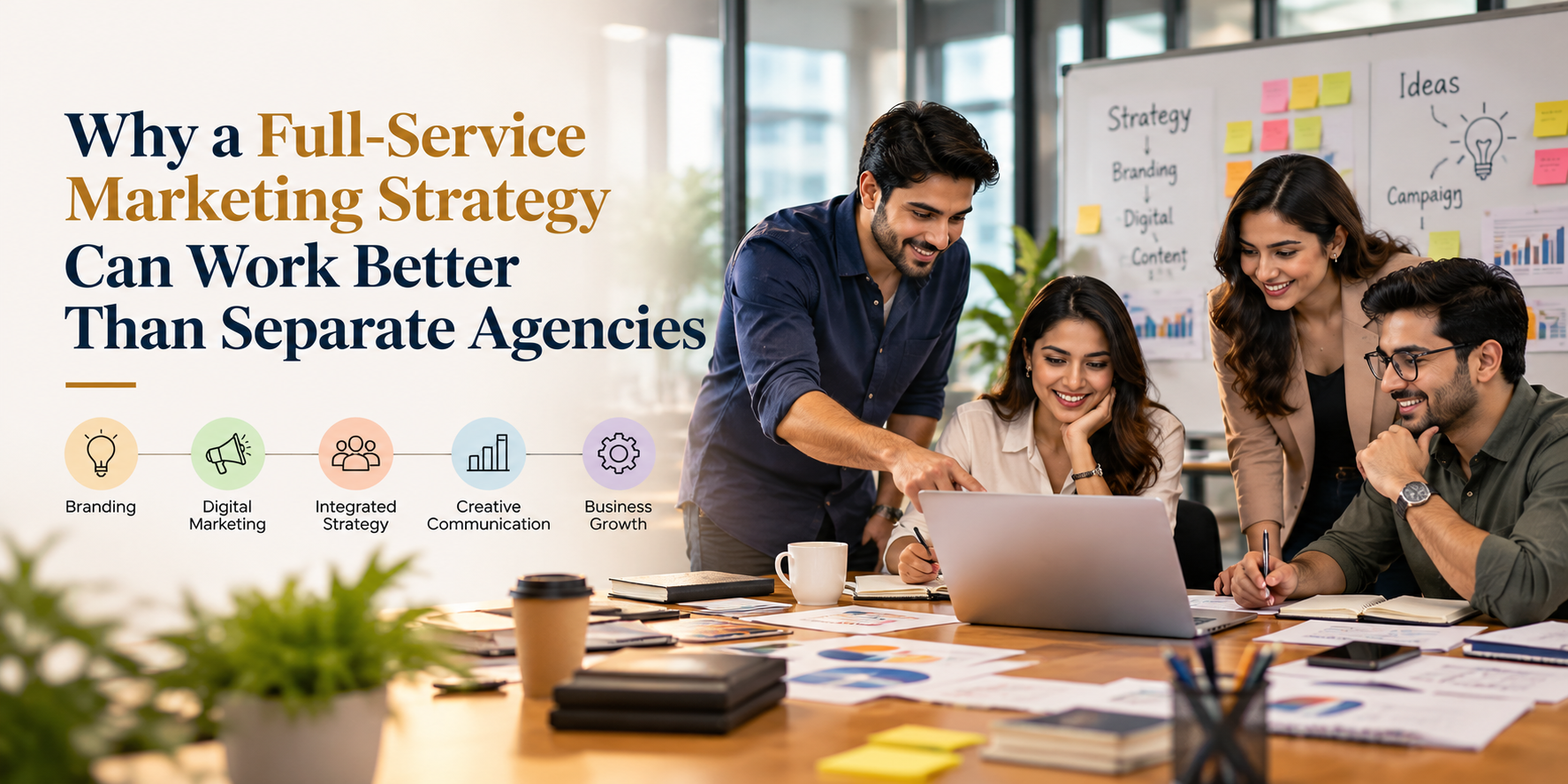
In today's competitive business environment, marketing is no longer limited to running advertisements or maintaining a social media presence. Businesses need a well-planned approach that combines branding, digital marketing, creative communication, and customer engagement to achieve sustainable growth. While hiring separate agencies for different marketing activities may seem like a practical choice, managing multiple teams can create communication gaps, inconsistent messaging, and disconnected strategies. This is where a Full-Service Marketing Agency can make a difference by bringing different marketing functions together under one roof. A unified marketing approach allows businesses to maintain consistency, streamline execution, and align every campaign with their overall business objectives. Instead of managing multiple service providers, companies can work with a single team that understands their brand, audience, and long-term goals.
What Is a Full-Service Marketing Strategy?
A full-service marketing strategy combines multiple marketing activities into one coordinated plan. It brings together services such as brand development, digital advertising, social media marketing, website development, content creation, and performance marketing to create a consistent brand experience. Unlike working with separate agencies that may focus only on individual deliverables, a Full-Service Marketing Agency looks at the bigger picture. Every activity is planned to support the same business objectives, whether that means increasing brand awareness, generating qualified leads, improving customer engagement, or driving sales. For example, a business launching a new product may need a strong brand identity, engaging social media content, a conversion-focused landing page, and targeted advertising. When these activities work together, the brand can deliver a more consistent message throughout the customer journey.
Why Separate Agencies Can Create Marketing Challenges
Working with multiple agencies can provide access to specialised expertise. However, without proper coordination, businesses may find it difficult to maintain a unified marketing direction.
Here are some common challenges associated with managing separate agencies.
1. Inconsistent Brand Communication
When different agencies handle branding, social media, advertising, and content creation, each team may interpret the brand differently. This can result in inconsistent messaging, visual identities, and campaign communication.
A strong brand needs to communicate the same values and personality across every platform. An integrated approach helps ensure that advertisements, website content, social media posts, and other marketing materials follow a consistent direction.
2. Communication and Coordination Gaps
Managing multiple agencies often means coordinating different timelines, sharing information repeatedly, and ensuring that every team understands the campaign objectives. These communication gaps can slow down execution and make campaign management more complicated. With a single marketing partner, businesses can simplify communication, streamline approvals, and coordinate activities more efficiently.
3. Disconnected Marketing Strategies
A social media campaign may generate engagement, while a digital advertising campaign focuses on lead generation. However, if both activities are planned independently, they may not contribute effectively to the same business goal. A coordinated Marketing Strategy connects individual marketing activities and ensures that every channel has a defined role in achieving the desired outcome.
4. Difficulty Measuring Overall Performance
When different agencies manage separate marketing channels, performance reports may focus only on individual activities. This can make it difficult to understand how different campaigns contribute to overall business growth. An integrated approach helps businesses evaluate performance across channels, identify opportunities for improvement, and make better-informed marketing decisions.
How a Full-Service Marketing Agency Creates Better Results
A Full-Service Marketing Agency brings strategy, creativity, execution, and performance analysis together. This allows businesses to build a marketing ecosystem where different activities support one another.
1. One Strategy Across Multiple Channels
Consistency is essential for building a recognisable brand. From the first advertisement a customer sees to the website they visit before making a purchase, every interaction should communicate a clear and consistent message.
An integrated marketing approach aligns branding, content, advertising, and digital communication with a common objective. This helps businesses create a more cohesive customer experience across multiple touchpoints.
2. Branding and Digital Marketing Work Together
Branding establishes how people perceive a business, while digital marketing helps communicate that identity to the right audience.
When a Branding Agency and digital marketing team work independently, there may be a gap between the brand's intended identity and its online communication. A unified team can align brand positioning, visual identity, messaging, and digital campaigns from the beginning. This makes it easier for businesses to build recognition, establish credibility, and maintain a consistent presence in the market.
3. Better Collaboration and Faster Execution
A coordinated team can simplify the process of planning and executing campaigns. Instead of sharing briefs across multiple agencies and resolving conflicting recommendations, businesses can work with a single team responsible for bringing different activities together. This can reduce unnecessary back-and-forth, improve coordination, and help campaigns move from planning to execution more efficiently.
4. More Effective Use of Marketing Budgets
When marketing channels operate independently, businesses may end up investing in overlapping activities or missing opportunities to use campaign insights effectively. An integrated marketing approach helps identify how different channels can support each other. For example, insights from digital advertising can inform content creation, while organic social media engagement can help businesses understand audience interests.
This coordinated approach can improve resource allocation and help businesses make more strategic use of their marketing budgets. Actual results, however, depend on the campaign objectives, execution, and available resources.
5. Clearer Performance Tracking
A successful marketing strategy requires continuous evaluation. Businesses need to understand which activities are attracting the right audience, generating enquiries, and contributing to conversions. When marketing activities are coordinated, teams can evaluate performance across channels and identify areas that need improvement. This makes it easier to refine campaigns, adjust targeting, and align future activities with business goals.
Full-Service Marketing vs. Separate Agencies: What Is the Difference?
The main difference lies in how marketing activities are planned, coordinated, and measured. Separate agencies generally focus on specific services, such as branding, social media marketing, or paid advertising. This arrangement can work well when businesses have clear requirements and the internal resources to coordinate multiple teams. A Full-Service Marketing Agency, on the other hand, brings different marketing capabilities together under a coordinated strategy. This approach can be particularly useful for businesses that want consistent brand communication, streamlined execution, and a more connected view of their marketing performance. Neither model is automatically better for every business. The right choice depends on the company's goals, internal capabilities, budget, and the level of coordination required.
Is a 360 Degree Marketing Approach Right for Your Business?
A 360 Degree Marketing approach can be valuable for businesses that want to connect their brand communication across multiple customer touchpoints. It considers how customers discover, evaluate, and engage with a brand across different channels. Startups can benefit from building a consistent brand identity from the beginning. Growing businesses can use integrated marketing to connect their expanding marketing activities, while established companies can benefit from aligning multiple campaigns with their broader business objectives. The key is to select marketing activities based on business needs rather than adopting every available service. A well-planned strategy prioritises the right channels, defines measurable objectives, and ensures that each activity contributes to the overall marketing direction.
Why Choose Magic Pencil for Your Marketing Needs?
At Magic Pencil, we believe that effective marketing begins with a clear understanding of a brand's vision, audience, and business objectives. Our approach combines creative thinking, strategic planning, branding, and digital execution to help businesses create meaningful brand experiences. From developing a distinctive brand identity to planning digital campaigns and strengthening online visibility, the focus is on bringing ideas to life through coordinated marketing efforts. By connecting creativity with strategy, businesses can communicate more consistently and build stronger relationships with their audiences. Choosing the right marketing partner is not just about finding an agency that offers multiple services. It is about finding a team that understands how those services work together to support your business goals.
Conclusion
Marketing works best when individual activities contribute to a larger business objective. While separate agencies can offer specialised expertise, coordinating their efforts requires clear communication, consistent planning, and effective management. A Full-Service Marketing Agency can simplify this process by connecting branding, digital marketing, content, and campaign execution under one strategy. With the right approach, businesses can create a consistent brand experience, make informed marketing decisions, and build a stronger foundation for long-term growth. Ultimately, the goal is not simply to do more marketing. It is to make every marketing activity work towards the same vision.
Get in Touch