
08
Sep
2026
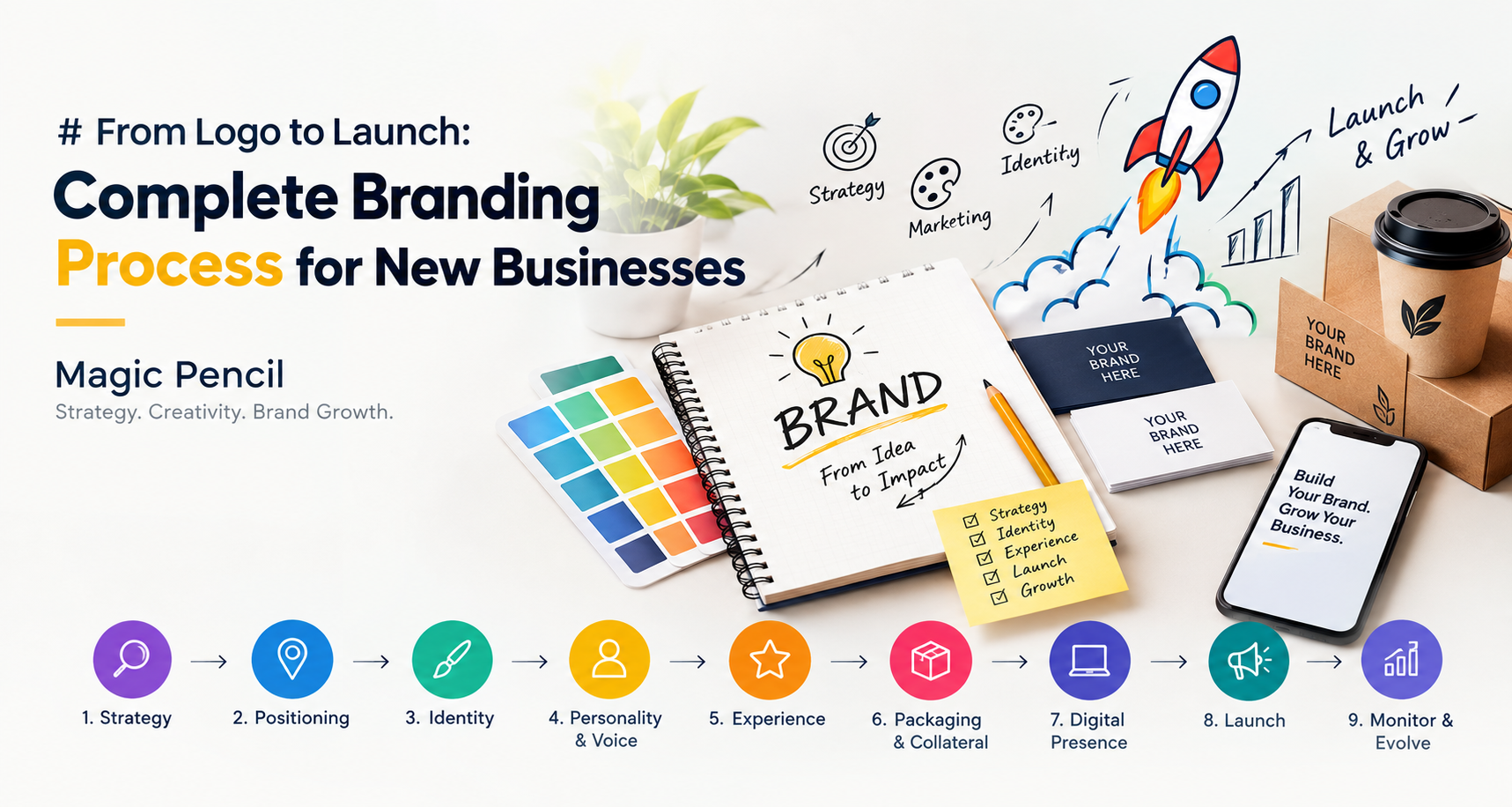
Starting a new business is exciting, but creating a brand that people remember requires much more than designing a logo. A successful brand combines strategy, creativity, positioning, communication, and consistent customer experiences. From defining your brand idea to launching it in the market, every step plays an important role in building recognition and trust.
For new businesses, a structured branding process can provide a strong foundation for long-term growth. Magic Pencil approaches branding as a complete brand-building journey rather than simply creating visual elements. Its branding services cover areas such as brand identity, brand positioning, brand personality, brand experience, and continuous brand evolution.
1. Start With Your Brand Strategy
Every strong brand begins with a clear strategy. Before designing a logo or choosing colours, businesses need to understand what they want to represent.
This involves identifying your business goals, target audience, competitors, unique selling proposition, and market positioning. Ask important questions such as:
Who are your ideal customers?
What problem does your business solve?
What makes your product or service different?
Why should customers choose you?
What values should your brand communicate?
A clear strategy helps ensure that every branding decision has a purpose.
2. Define Your Brand Positioning
Brand positioning determines how you want customers to perceive your business compared with competitors. A startup should have a clear reason for existing in the market and a distinct value proposition.
For example, a business could position itself around premium quality, affordability, innovation, sustainability, convenience, or specialised expertise.
Strong positioning makes it easier to create marketing messages that connect with the right audience.
3. Create Your Brand Identity
Once the strategy and positioning are established, the visual identity can take shape.
A brand identity may include:
Logo design
Colour palette
Typography
Brand guidelines
Graphic elements
Photography style
Packaging design
Social media visuals
Marketing materials
The logo is an important part of the identity, but it is only one element. A complete identity creates consistency across every customer touchpoint.
4. Develop Your Brand Personality and Voice
Brands, like people, have personalities. Your brand could be professional, youthful, luxurious, friendly, bold, innovative, traditional, or playful.
Defining this personality helps determine how your business communicates with customers.
Your brand voice should remain consistent across your website, social media, advertisements, packaging, brochures, emails, and other communication channels. Consistency helps customers recognise and remember your brand.
5. Build a Strong Brand Experience
Branding does not stop with visuals. Customers experience your brand every time they interact with your business.
This includes your:
Website
Customer service
Packaging
Social media
Advertising
Product experience
Store or office environment
Communication style
A consistent and positive experience can help build trust and encourage repeat customers.
6. Design Packaging and Marketing Collateral
For product-based businesses, packaging can become one of the most important branding tools. Customers often interact with packaging before they experience the product itself.
Effective packaging should communicate the brand identity, product benefits, quality, and personality while remaining visually appealing.
Marketing collateral such as brochures, catalogues, business cards, presentations, banners, and digital creatives should also follow the same visual language.
7. Prepare Your Digital Presence
Before launching your business, make sure your digital platforms are ready.
Your website should clearly communicate who you are, what you offer, and why customers should trust you. Social media profiles should maintain the same branding across platforms.
Digital marketing can then help introduce the new brand to its target audience through search, social media, advertising, content marketing, and other channels. Magic Pencil combines creative thinking with digital marketing and performance-focused strategies to help businesses build stronger market visibility.
8. Plan the Brand Launch
A successful launch requires more than simply announcing that your business is open.
Create a launch plan covering your audience, communication channels, content, advertising, promotional activities, and timeline.
A well-planned launch can create awareness while ensuring that customers understand your brand, products, and value proposition.
9. Monitor, Learn and Evolve
Branding is not a one-time activity. Markets, customers, competitors, and trends continuously change.
After launch, monitor customer feedback, campaign performance, engagement, website behaviour, and sales. Use these insights to improve your communication and marketing strategy.
A strong brand evolves while maintaining its core identity.
Conclusion
From the first strategy discussion to the final launch campaign, branding is a complete process that shapes how customers see, remember, and connect with a business. A logo may be the starting point, but a successful brand is built through strategy, identity, storytelling, experience, marketing, and consistency.
For startups and new businesses, working with an experienced creative and branding partner can make this journey more structured and impactful. Magic Pencil brings together branding, creative strategy, digital marketing, advertising, packaging, and campaign execution to help businesses transform ideas into memorable brand experiences.
If you are planning to launch a new business, Magic Pencil can help turn your idea into a distinctive brand ready for the market.
Get in touch with Magic Pencil today and start building your brand from logo to launch.
Get in Touch