
21
Oct
2026
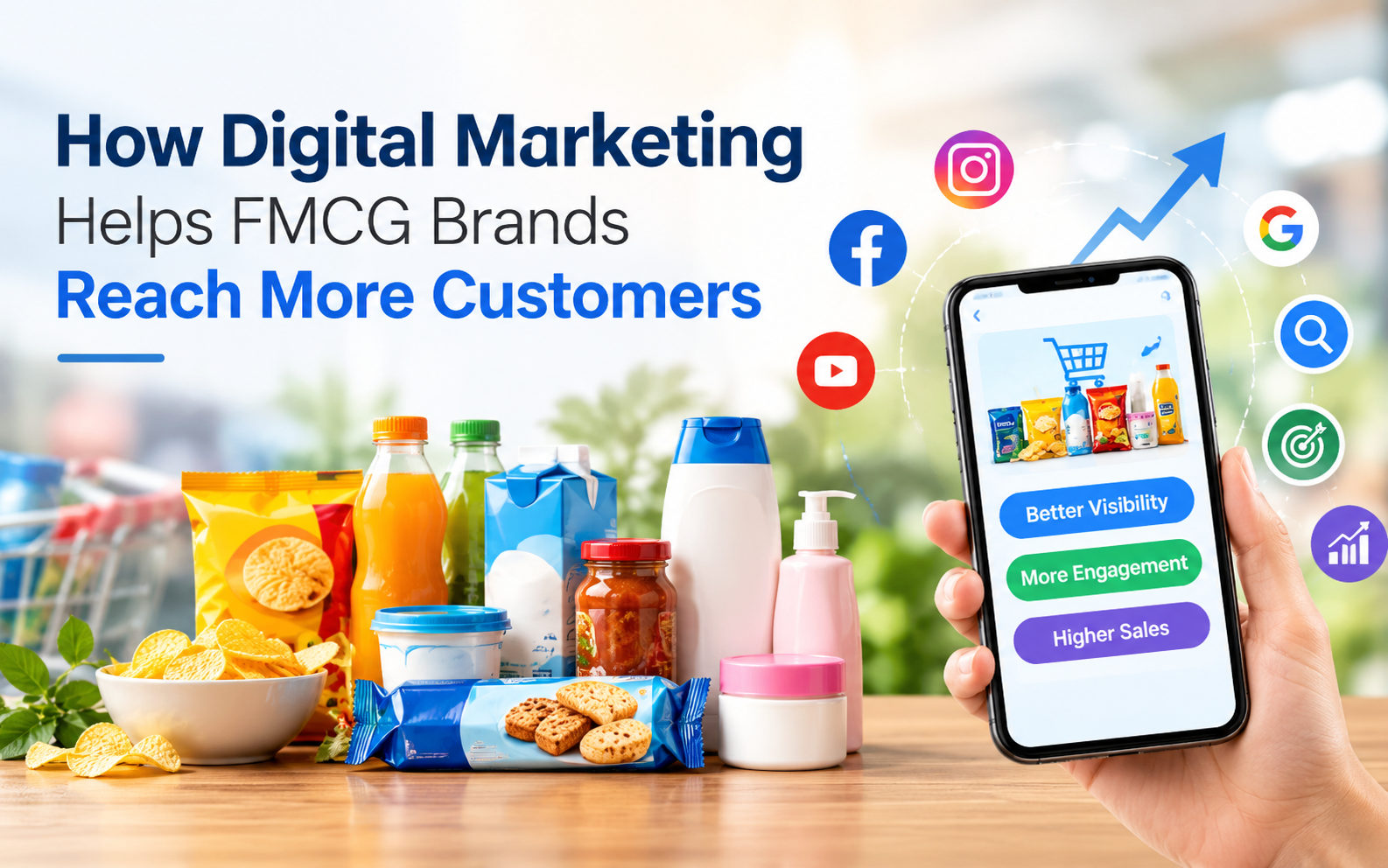
The Fast-Moving Consumer Goods (FMCG) industry is highly competitive, with brands constantly looking for ways to attract customers, increase product visibility, and build long-term loyalty. From packaged foods and beverages to personal care and household products, consumers have countless options available in the market. In this competitive environment, digital marketing for FMCG brands has become an essential strategy for reaching the right audience and driving business growth. Digital platforms allow FMCG companies to connect with consumers, communicate product benefits, promote new launches, and strengthen brand recognition. With the right combination of social media marketing, search engine optimization, online advertising, and creative campaigns, brands can reach more customers and remain competitive in a rapidly changing marketplace.
1. Builds Strong Brand Awareness
Brand awareness is essential for FMCG businesses because consumers often choose products they recognize and trust. Digital marketing helps brands establish a consistent presence across platforms such as Instagram, Facebook, YouTube, and Google. Creative advertisements, engaging videos, product demonstrations, and informative posts introduce products to potential customers. Regular communication helps consumers become familiar with a brand and its offerings. For example, a packaged food brand can use short recipe videos, product-focused creatives, and festive campaigns to showcase its products and encourage consumers to explore its range.
2. Reaches the Right Target Audience
One of the biggest advantages of digital marketing is the ability to target specific audiences. Unlike traditional advertising, digital campaigns can be tailored according to factors such as location, interests, age groups, shopping behaviour, and online activity. For FMCG brands, this means promotional campaigns can reach consumers who are more likely to be interested in their products. A personal care brand may target audiences interested in skincare, while a snack brand may focus on consumers who engage with food, recipes, and lifestyle content. Precise audience targeting helps businesses use advertising budgets more efficiently and improve the relevance of their marketing messages.
3. Increases Customer Engagement Through Social Media
Social media marketing plays a significant role in helping FMCG brands build relationships with customers. Platforms such as Instagram, Facebook, and YouTube allow businesses to communicate directly with their audiences. Brands can share product launches, behind-the-scenes content, customer reviews, recipes, seasonal offers, and interactive posts. Polls, contests, and user-generated content can also encourage consumers to participate in brand conversations. Consistent engagement helps businesses understand customer preferences, respond to questions, and develop a stronger connection with their audience. Over time, these interactions can support brand loyalty and repeat purchases.
4. Improves Online Visibility Through SEO
Search engine optimization (SEO) helps FMCG brands appear in relevant search results when consumers look for products, ingredients, product comparisons, or purchasing options. An effective FMCG SEO strategy includes optimizing product pages, publishing useful blogs, improving website performance, and targeting relevant search terms. For example, a food brand can create content around recipes, snack ideas, or ingredient-related searches that connect naturally with its products. Better search visibility can attract relevant website traffic and help customers discover a brand while researching their next purchase.
5. Drives Sales Through Paid Digital Advertising
Paid advertising on Google, Meta platforms, and suitable e-commerce channels can help FMCG brands promote products to highly relevant audiences. Campaigns can support different objectives, including brand awareness, website traffic, product discovery, and online sales. Remarketing is another useful strategy. It allows brands to reconnect with people who have previously visited their website or interacted with their content, where platform permissions and tracking requirements allow. By monitoring impressions, clicks, conversions, and advertising costs, businesses can identify which campaigns perform well and optimize their budgets accordingly.
6. Supports New Product Launches
Launching a new FMCG product requires visibility, customer interest, and effective communication. Digital marketing helps businesses introduce new products through coordinated campaigns across social media, search engines, influencer collaborations, and digital advertisements. Brands can build anticipation before launch, explain product features during the launch period, and share customer feedback afterward. For instance, a new beverage or snack product can be promoted through engaging videos, sampling campaigns, creator partnerships, and targeted advertisements. This integrated approach helps generate awareness and encourages consumers to try the product.
7. Uses Data to Improve Marketing Performance
Digital marketing provides measurable insights into campaign performance and customer behaviour. FMCG businesses can evaluate engagement rates, website visits, audience demographics, conversion rates, and advertising returns to understand what works best. These insights help marketers refine creative content, adjust audience targeting, test different messages, and allocate budgets more effectively. Regular performance analysis also enables brands to respond to changing consumer interests and market conditions rather than relying entirely on assumptions.
Why Choose Magic Pencil for FMCG Digital Marketing?
For FMCG brands, successful digital marketing requires more than simply posting on social media or running advertisements. It involves a coordinated strategy that combines creative communication, audience research, digital visibility, and performance measurement. Magic Pencil helps businesses strengthen their digital presence through creative marketing strategies designed around brand objectives and audience needs. From branding and digital campaigns to content creation and online visibility, a well-planned marketing approach can help FMCG businesses communicate their value and build stronger connections with consumers.
Conclusion
Digital marketing has transformed how FMCG brands reach customers, promote products, and build lasting brand relationships. Through social media engagement, SEO, targeted advertising, creative campaigns, and data-driven optimization, businesses can improve visibility and connect with relevant audiences across digital channels. For FMCG companies aiming to expand their reach and remain competitive, investing in a strategic digital marketing approach is an important step toward sustainable growth. Looking to strengthen your FMCG brand's digital presence? Connect with Magic Pencil to explore creative digital marketing strategies tailored to your business goals.
Get in Touch